Why the Cut Decides What a Diamond Does With Light
Carat tells you how much stone you are holding; the cut tells you how it behaves on the hand, in a room, across a dinner.

A diamond is an optical machine. Its job is to take light in, bend it, and send it back to your eye. How well it does that is almost entirely a question of cut: the angles between facets, the depth of the pavilion, the symmetry of the crown. Carat weight measures mass. It says nothing about whether a stone wakes up under light or stays flat.
Start with proportion. A round brilliant with a well-judged pavilion angle, somewhere near forty-one degrees, returns light up through the table instead of leaking it out the bottom. Cut too deep or too shallow and the same weight reads dark or glassy. Two one-carat stones can look a size apart because one spreads its weight across the face and the other hides it in the belly.
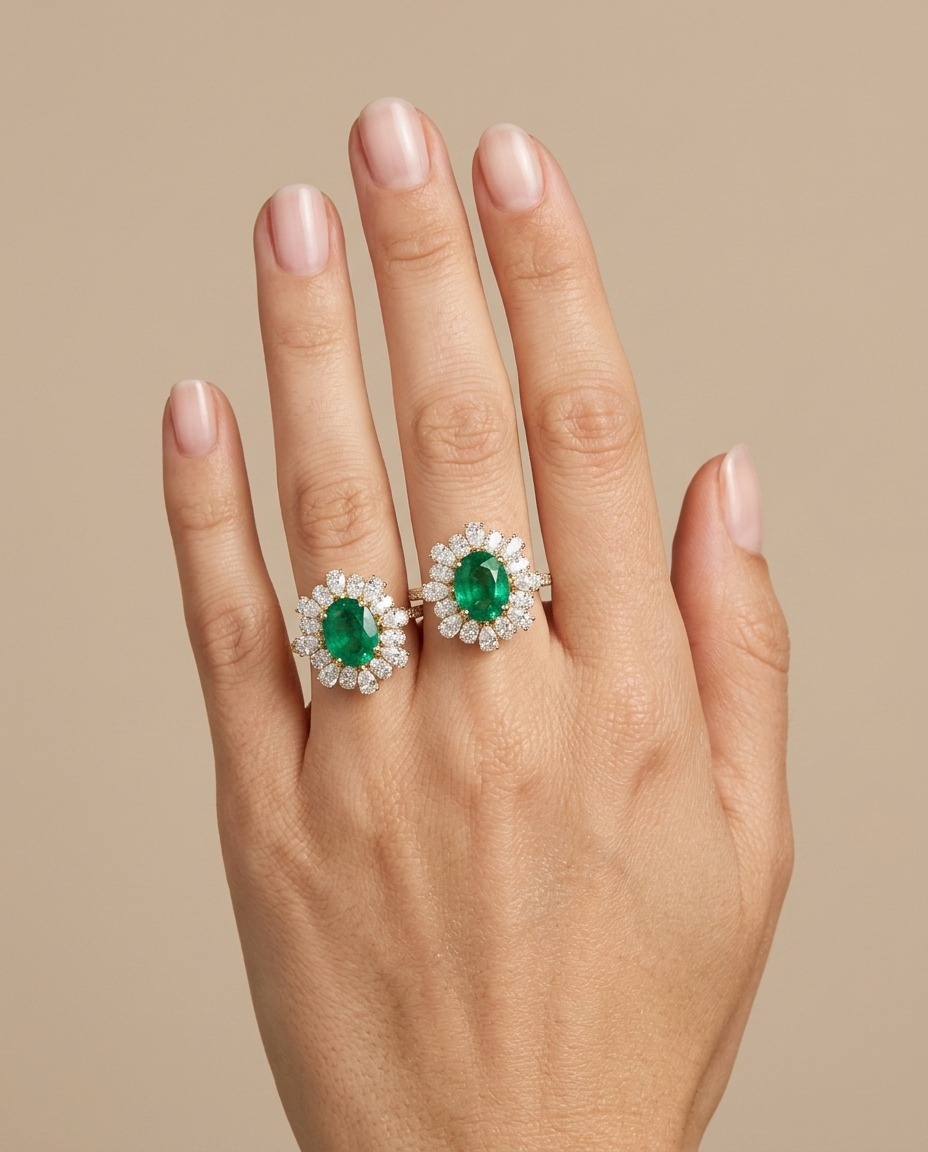
Shape is the next decision, and it is a decision about the hand, not the spec sheet. An elongated cut — oval, marquise, emerald — draws the finger longer and reads larger for its weight. A round or cushion sits compact and bright. An emerald cut trades fire for long, clean flashes; it asks for high clarity because its open facets hide nothing. A brilliant cut forgives more and sparkles harder.
So the honest order of operations is cut, then shape, then weight. Choose the facet architecture that flatters how you actually wear a ring, and let carat be the last variable rather than the first. A beautifully cut stone a few points lighter will outperform a heavier one that was cut to save weight.
Every stone we sell is authenticated before it reaches you, and the price you see is the price at checkout. The rest is personal: come find the cut that looks like yours. We are in Los Angeles, by appointment.