How Stacked Rings and Layered Chains Actually Move
The trick to layering isn't quantity — it's tolerances, band profiles, and where each piece is allowed to travel.
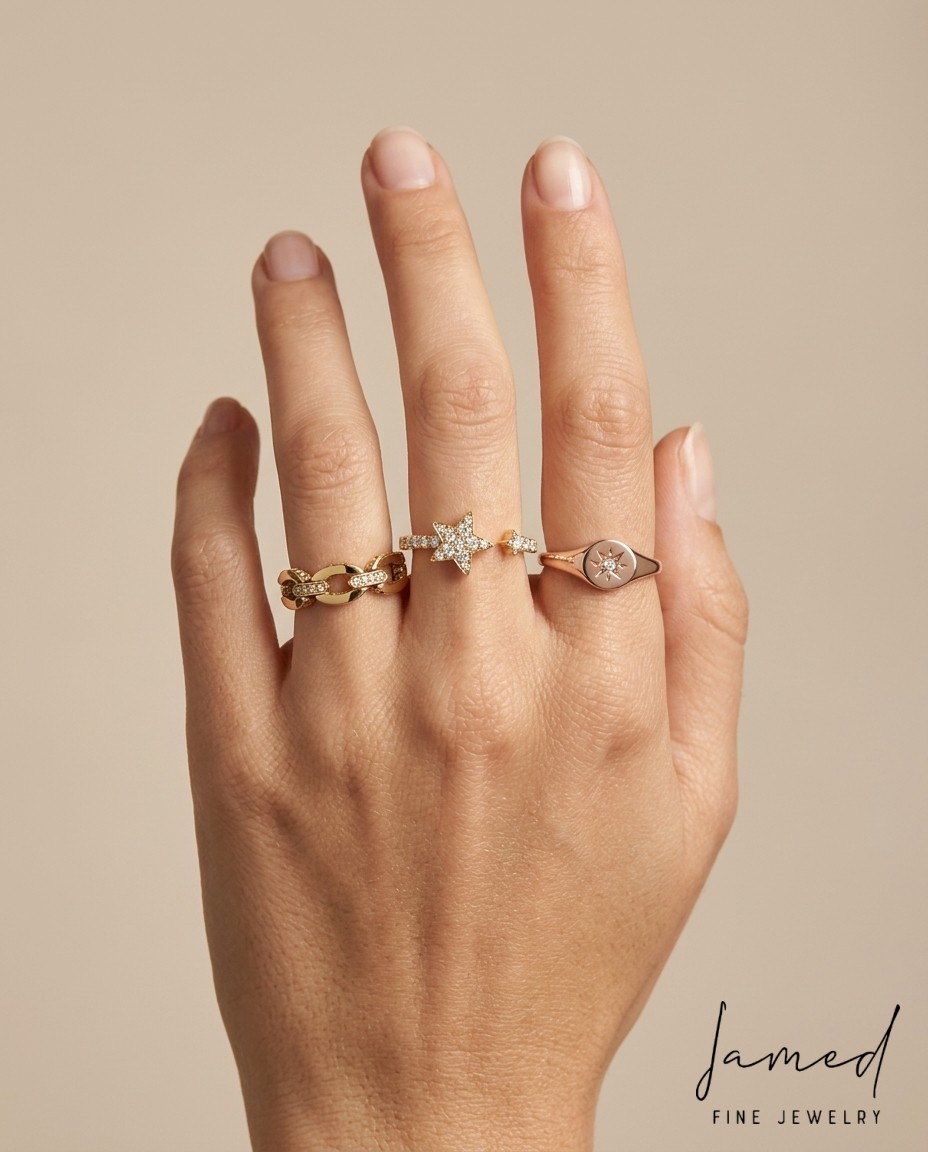
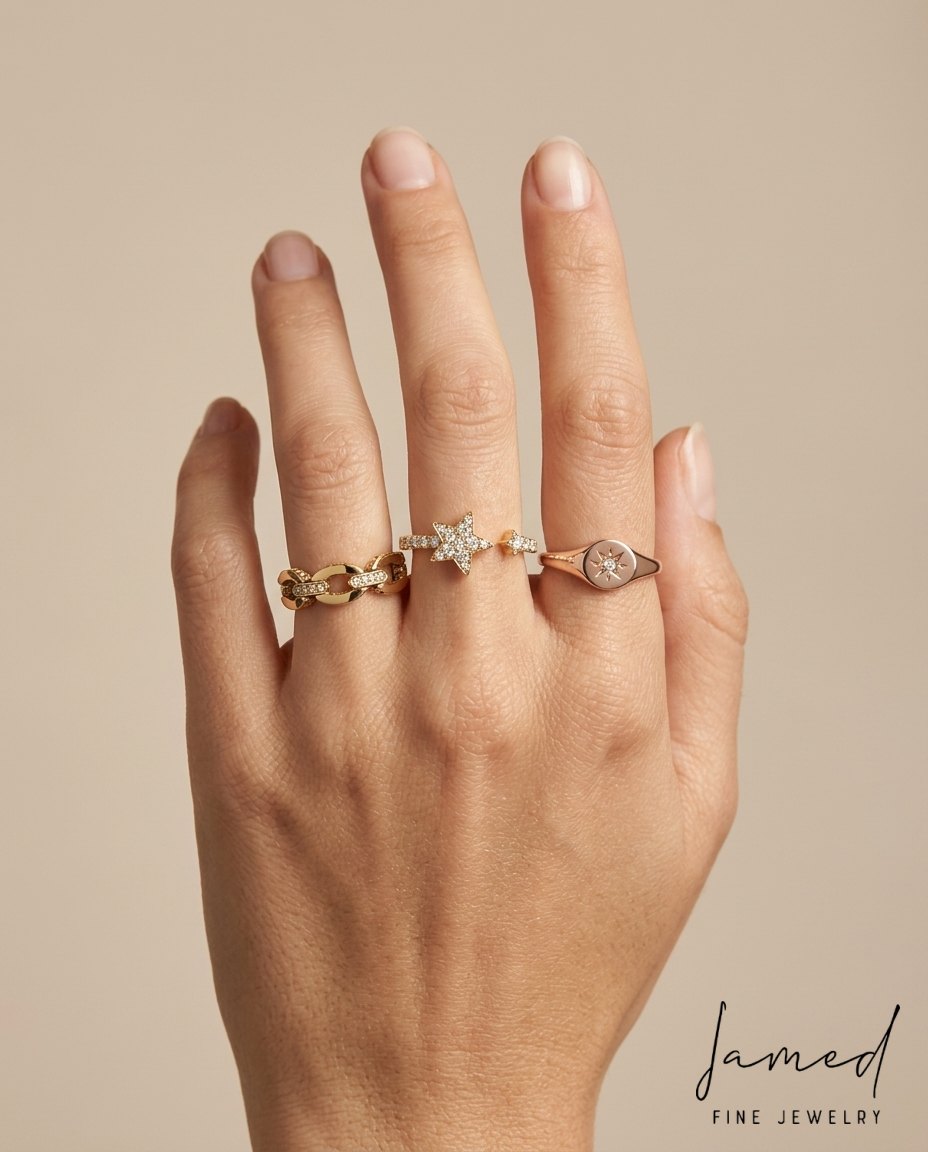
Start with the ring band, because that is where crowding is won or lost. A comfort-fit band has a domed interior, so it sits proud of the finger and rocks slightly. A flat-court band beds down and stays put. Stack two comfort-fit bands and they climb over each other on the palm side; the pile looks busy because it is literally in motion. Pair a 2mm flat-court base with a low-profile bezel ring above it and the two lock into a single plane. That reads as one considered object, not three competing ones.
Profile height matters more than width. A 1.6mm-tall band and a 4mm-tall band on adjacent fingers fight for the eye. Keep stacked heights within roughly a millimeter of each other and the light hits them as a continuous surface. Mix a bright polish with a matte or hammered finish only if the widths agree — the finish contrast does the talking, so the geometry should stay quiet.
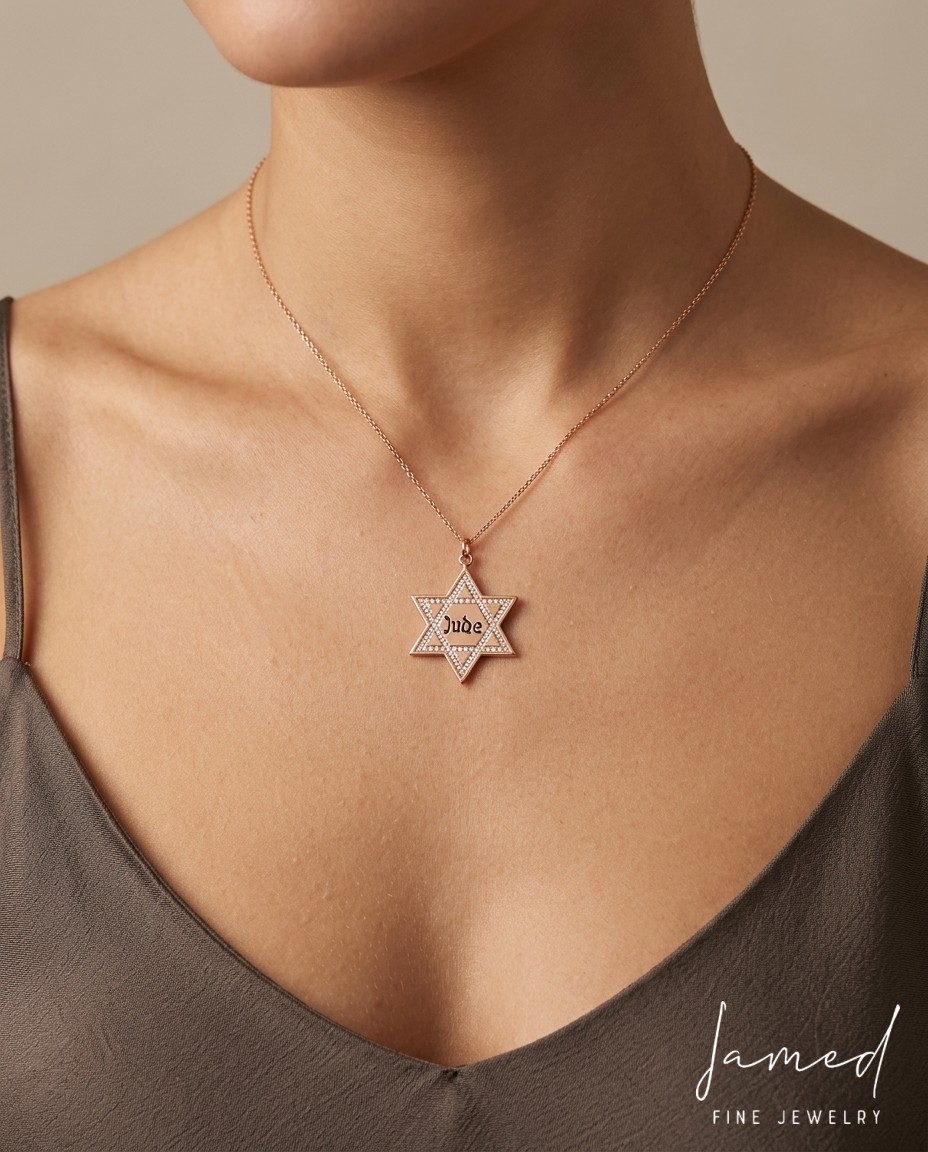
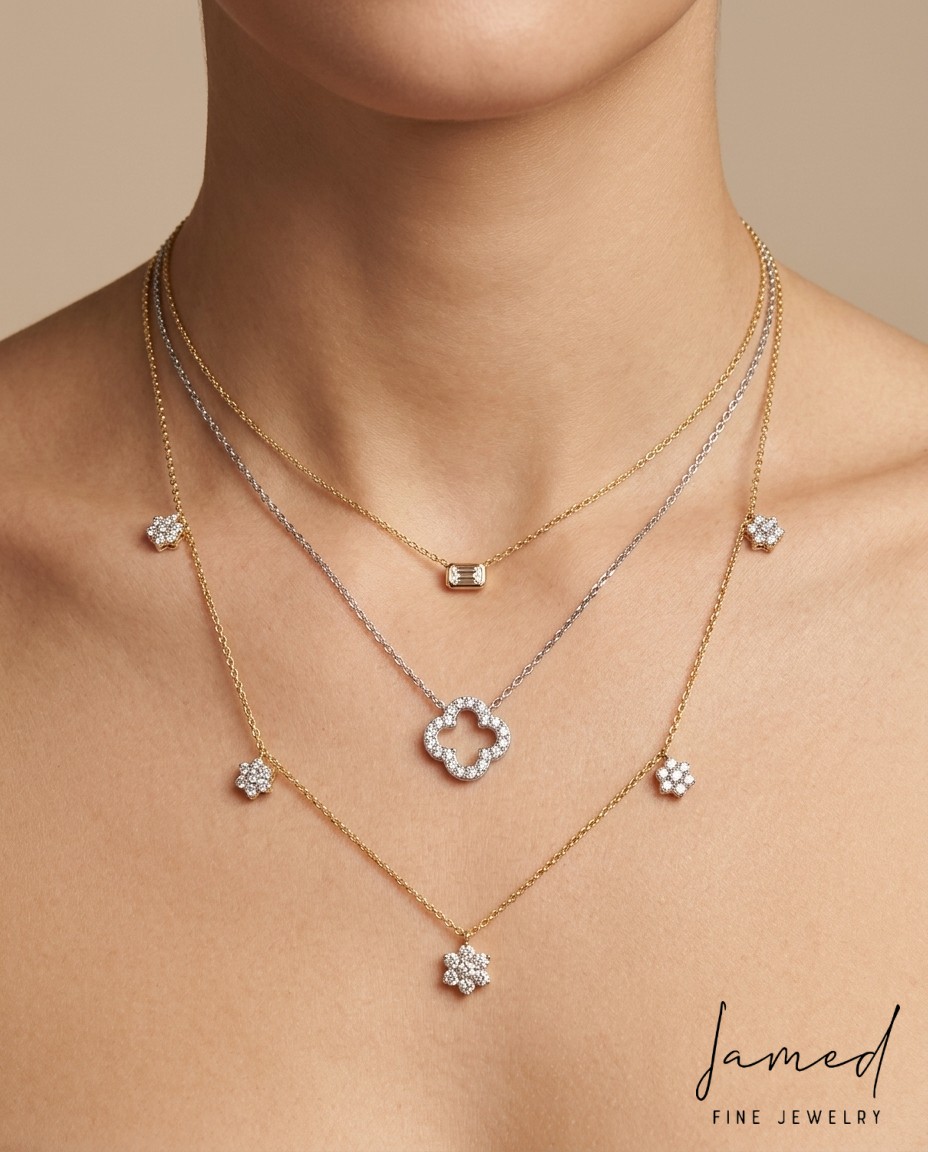
Chains obey the same logic on a longer axis. The problem people call "crowding" is usually two chains of similar length swinging into the same arc. Separate them by drop, not by count: a 40cm collar, a 45cm principal, a 50cm pendant. Each occupies its own band of the chest and none crosses another. Link architecture sets the weight. A cable link is open and airy; a curb or Figaro link lies flat and dense. Put the densest chain lowest, where it anchors, and let the open link float on top.
Gauge is the last variable. A 1.2mm cable and a 3mm curb worn together look intentional because the eye reads a clear hierarchy. Three chains at the same 2mm gauge look like an accident of the jewelry box.
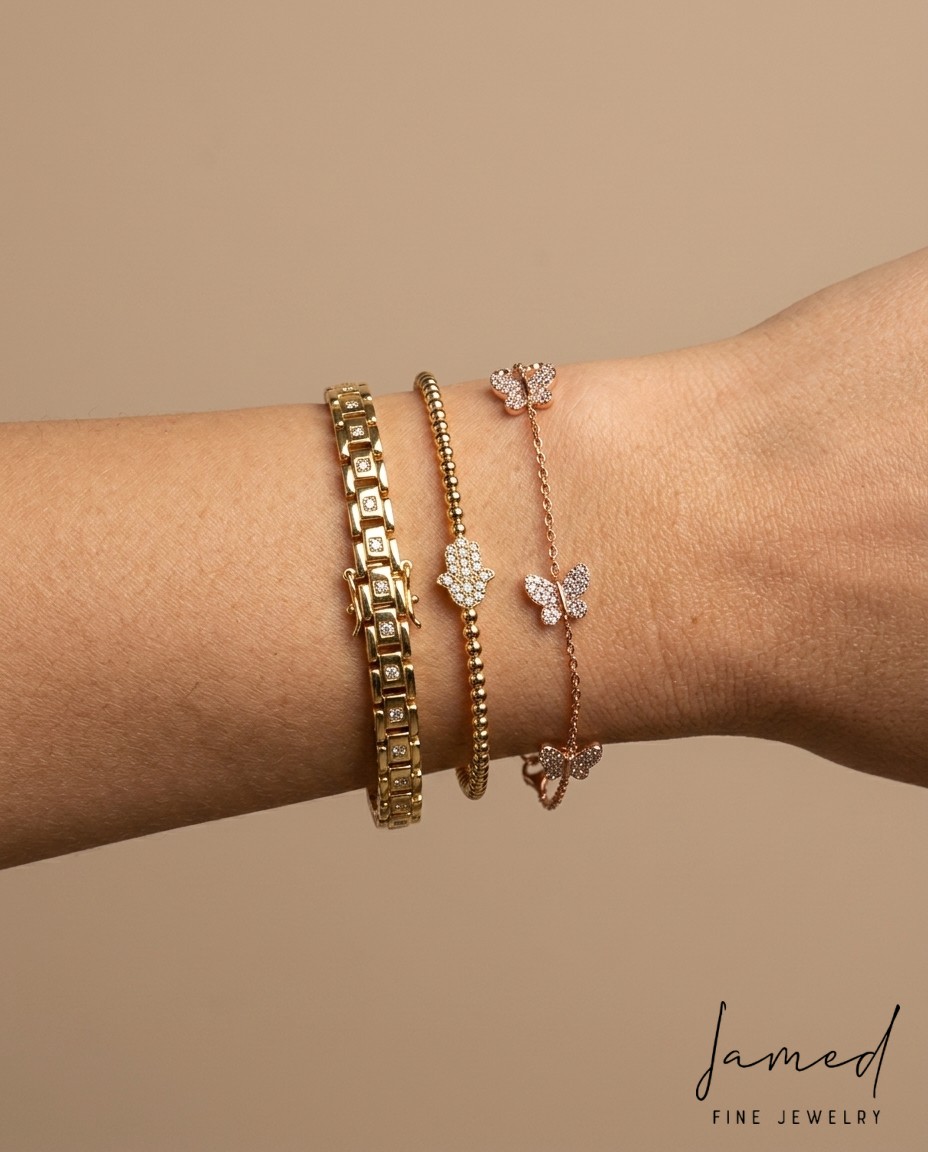
The discipline is subtraction disguised as arithmetic. Match what should match — height, plane, gauge family — and vary one thing on purpose. That single deliberate difference is what keeps a stack from collapsing into noise.