Fine Rings: A Buyer's Guide to Gold, Diamonds, and Colored Stones
How to read metal, carat, and cut so a ring you buy today still earns its place in ten years.

A ring is the hardest-working piece of jewelry you own. It sits on your hand in direct light, catches every glance, and takes abuse that earrings and pendants never see. That combination of visibility and wear is exactly why the fundamentals matter more here than in any other category. Our current selection spans a wide range of price points, which means the decision is rarely about budget alone. It's about matching metal, stone, and construction to the way you actually live.
Metals and Stones to Know
Most fine rings are built in 14KT gold, and for good reason. At 58.5% pure gold, the alloy is durable enough for daily wear while holding color and polish. Yellow gold reads warm and traditional and flatters warmer skin tones. White gold, usually rhodium-plated, gives a cool, bright setting that makes diamonds look whiter. Rose gold pulls its blush from added copper and pairs especially well with soft-hued stones like morganite.
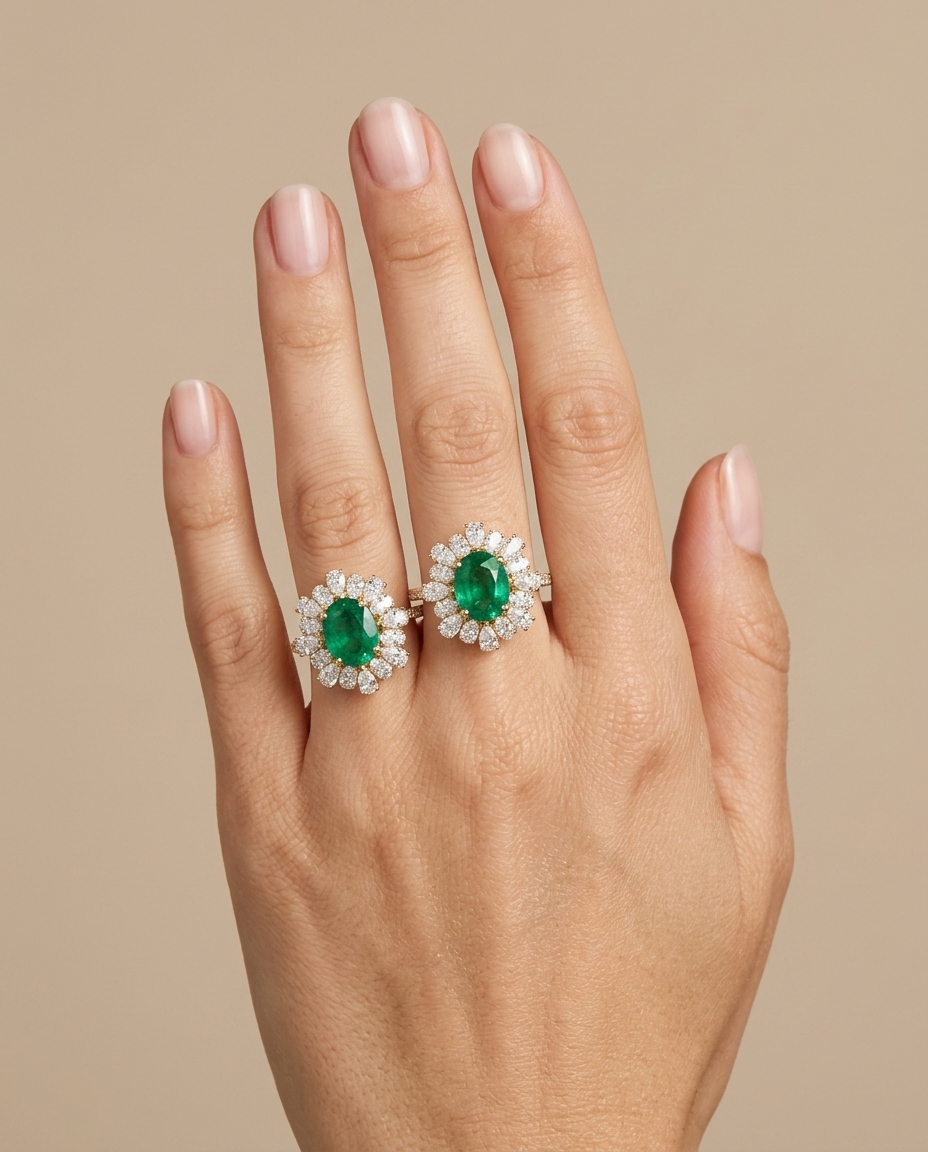
Diamonds remain the anchor of the category, whether as a solitary center or set as accents. Beyond diamonds, colored stones are where personality lives. Emerald delivers deep green and real presence, as in our 14KT Yellow Gold Emerald and Diamonds Ring at 1.66 carats. Morganite offers a gentle peach-pink that suits rose and yellow gold alike; our 14KT Gold Morganite and Diamonds Ring shows how well it reads against warm metal. Green tourmaline gives a cooler, more unusual green, seen in the 14KT White Gold Green Tourmaline and Diamonds Ring. Each stone has its own hardness and care needs, which is worth knowing before you commit.
Carat and Quality Factors
Carat is weight, not size, and the two diverge depending on the stone. A denser gem weighs more at the same visual footprint. When you read a spec like the 1.82-carat diamond ring or the 1.96-carat eternity band, that number often reflects total carat weight across every stone, not one center. Ask which it is.
For diamonds, the four Cs govern quality. Cut controls how the stone returns light and is the factor most people underestimate; a well-cut half-carat can outshine a lazy three-quarter. Color runs from icy white down toward faint yellow, and clarity measures internal inclusions. For colored stones, judge saturation and evenness of color first, then clarity. A vivid, well-saturated emerald forgives minor inclusions that the trade considers normal for the species.
What to Check Before Buying
Turn the ring over. The underside of a quality piece is finished as carefully as the top, with clean prong tips and no rough solder. Press gently on each stone; nothing should shift. On pavé and accent settings like the Diamonds and Oval Emerald Open Ring, look closely at how the small stones are seated, since loose melee is the first thing to fail on a poorly made ring. Check that the band has enough metal thickness to survive resizing and years of wear. Thin, hollow shanks bend and wear through. Ask for grading documentation on center diamonds above roughly half a carat, and get any colored-stone treatments disclosed in writing.
Sizing, Fit, and Wearability
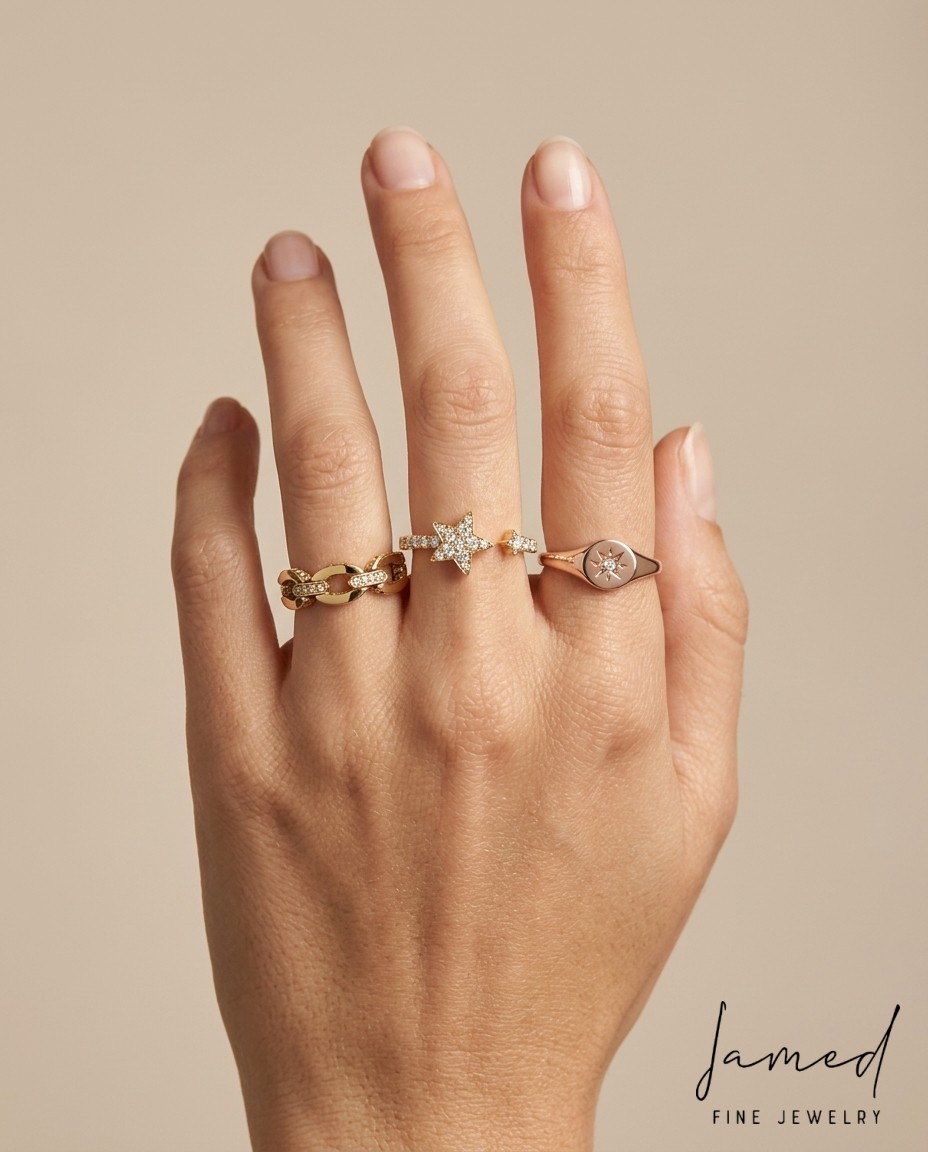
Fit changes with the design. A wide band wears tighter than a thin one at the same nominal size, so size up slightly for anything broad. Eternity bands, like our 1.96-carat diamond eternity, generally cannot be resized because stones circle the entire shank; get the measurement right the first time. Open or bypass designs such as the oval emerald open ring offer a little natural give and suit fingers that swell during the day. Fingers run larger in heat and late afternoon, so measure then rather than first thing on a cold morning. If you plan to stack, buy pieces in compatible profiles. Any of our rings can be worn together, and a slim eternity band beside a colored-stone ring is a reliable pairing.
How Value Holds
Rings hold value through material and workmanship, not hype. The gold content carries an intrinsic floor that tracks the metal market, which is why solid 14KT matters more than plating. Natural stones with strong color and clean cuts retain demand across decades because supply is genuinely limited. Classic forms hold better than trend-driven ones: a solitaire, an eternity band, or a well-matched emerald-and-diamond ring stays wearable long after novelty shapes date. Keep your documentation, have prongs checked every couple of years, and clean the piece regularly. A ring maintained this way stays both beautiful and liquid, which is the real test of whether it was worth buying.
The pieces in this story
Shop the exact piece featured above.
Rings — available now
Live inventory from our collection. Pieces shown are in stock and update as they sell.