Read the Cut Before You Read the Carat
Two diamonds of equal weight can look a full size apart on the hand — the difference is cut, and it's where your money works hardest.
Carat is a weight, not a look. That surprises people. A stone can carry every bit of its half-carat and still sit dull on the finger, because weight tells you how much diamond is there, not how well it throws light back at you.
Cut is what does the flattering. A well-cut round brilliant returns light through the top, so it reads bright and, often, a touch larger than its weight suggests. Depth is the trade-off hiding in the numbers: a stone cut too deep buries its carats in the belly, where no one sees them, and pays for the privilege.
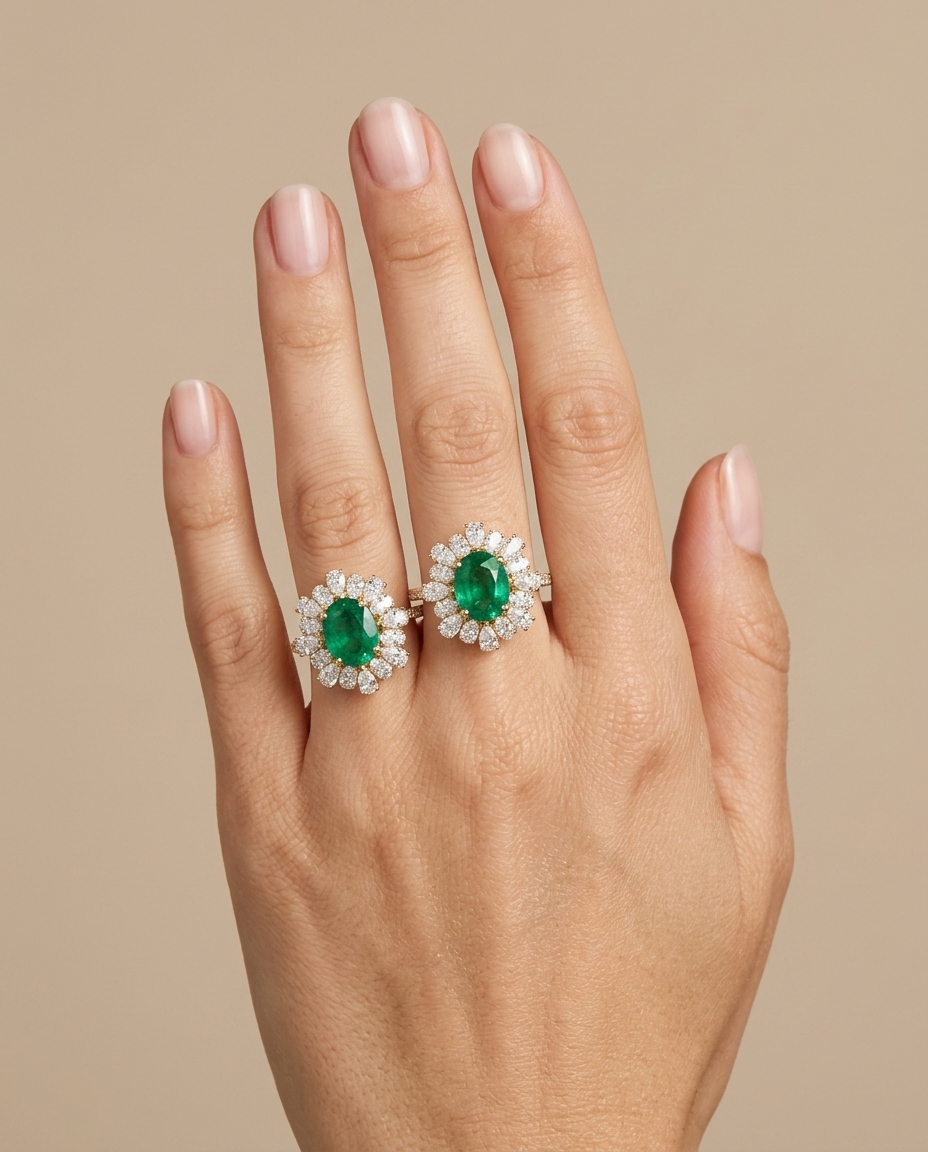
Shape changes the conversation on the hand. An oval or a marquise stretches the finger and faces up big for its weight — kind to a modest budget, generous on a slim hand. Emerald and Asscher cuts trade fire for a quieter, stepped clarity; they show the stone's honesty, so they ask for better color and fewer inclusions. A cushion softens everything and sits warm against yellow gold.
Here is the placement worth remembering. If your budget lands around three-quarters of a carat, an excellent-cut stone at that weight will nearly always outshine a full carat cut poorly — more brightness, more presence, less money spent on grams you'll never notice. Weight is the easy thing to shop for because it's a single number. Cut is the thing you actually wear.
So hold two before you choose. Turn them under a plain light, not a jeweler's spotlight. Watch which one keeps talking when you look away and back. The one that flatters your hand is rarely the heavier one — it's the one cut to give its light back to you.