Platinum Solitaire vs 18k Gold Solitaire: The Honest Call
Same diamond, two metals, one real price gap. Where platinum and gold diverge, and which to pick.

<p>Put a platinum solitaire and an 18k yellow-gold solitaire side by side with the same diamond, and most buyers cannot say why one costs more. The stone is identical. The whole argument lives in the metal, and it is worth understanding before you pay the premium.</p><p>They diverge first on how they hold a diamond. Platinum is denser and more malleable, so its prongs bend over a stone and stay put through years of knocks, which is why the trade favors it for securing a single important diamond. 18k gold is harder in the alloy, but its prongs wear thinner over time and need re-tipping sooner. Neither fails you, but they age on different schedules.</p><p>Color is the next split. Platinum is naturally white and stays that way. White gold is gold plus a rhodium plating that wears off and needs redoing every few years to stay bright. Yellow and rose 18k skip the plating entirely and show their true color forever, which some buyers prefer to the cool white look.</p><p>Price and weight diverge together. Platinum is heavier and priced above gold per gram, so the same ring costs more and feels more substantial on the finger. 18k gives you more visible metal for the money and a warmer tone.</p><p>Who each is for sorts quickly. Platinum suits the buyer who wants set-and-forget security for a serious center stone and likes cool white with weight behind it. 18k gold suits the buyer who wants warmth, a lighter feel, and no rhodium upkeep down the road.</p><p>If forced to pick one for a stone you plan to keep, platinum takes it, with the caveat that it scuffs to a soft patina you either love or have polished off. For everything else, 18k gold is the easier ring to live with.</p>
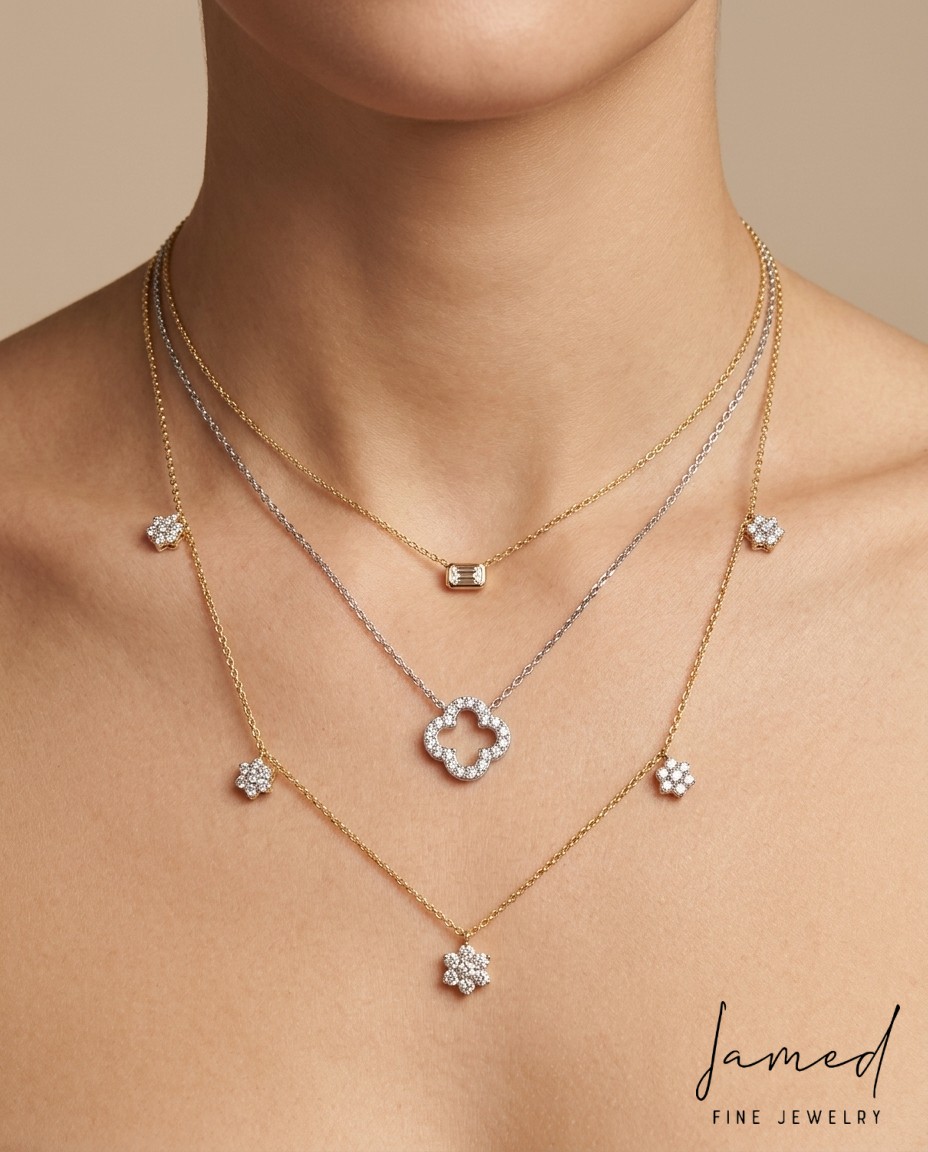
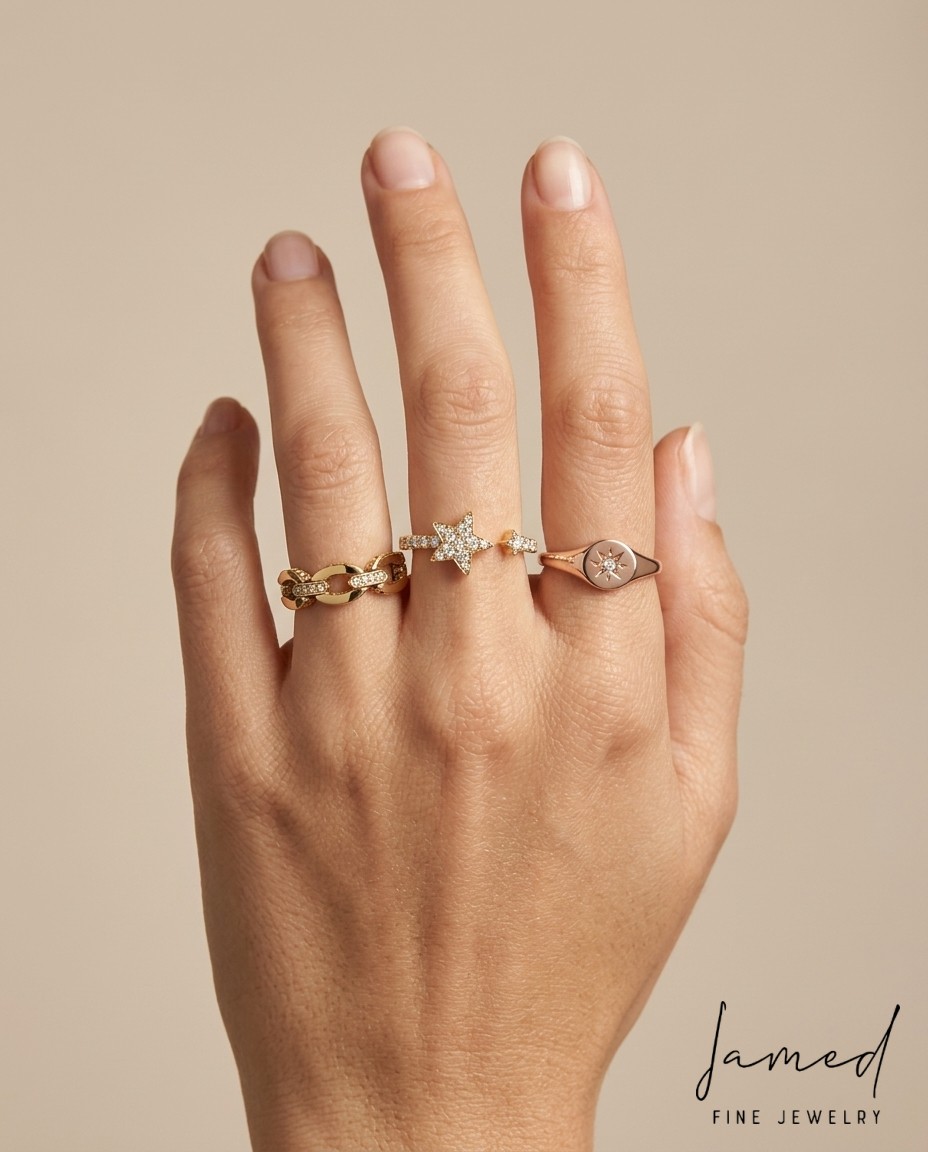
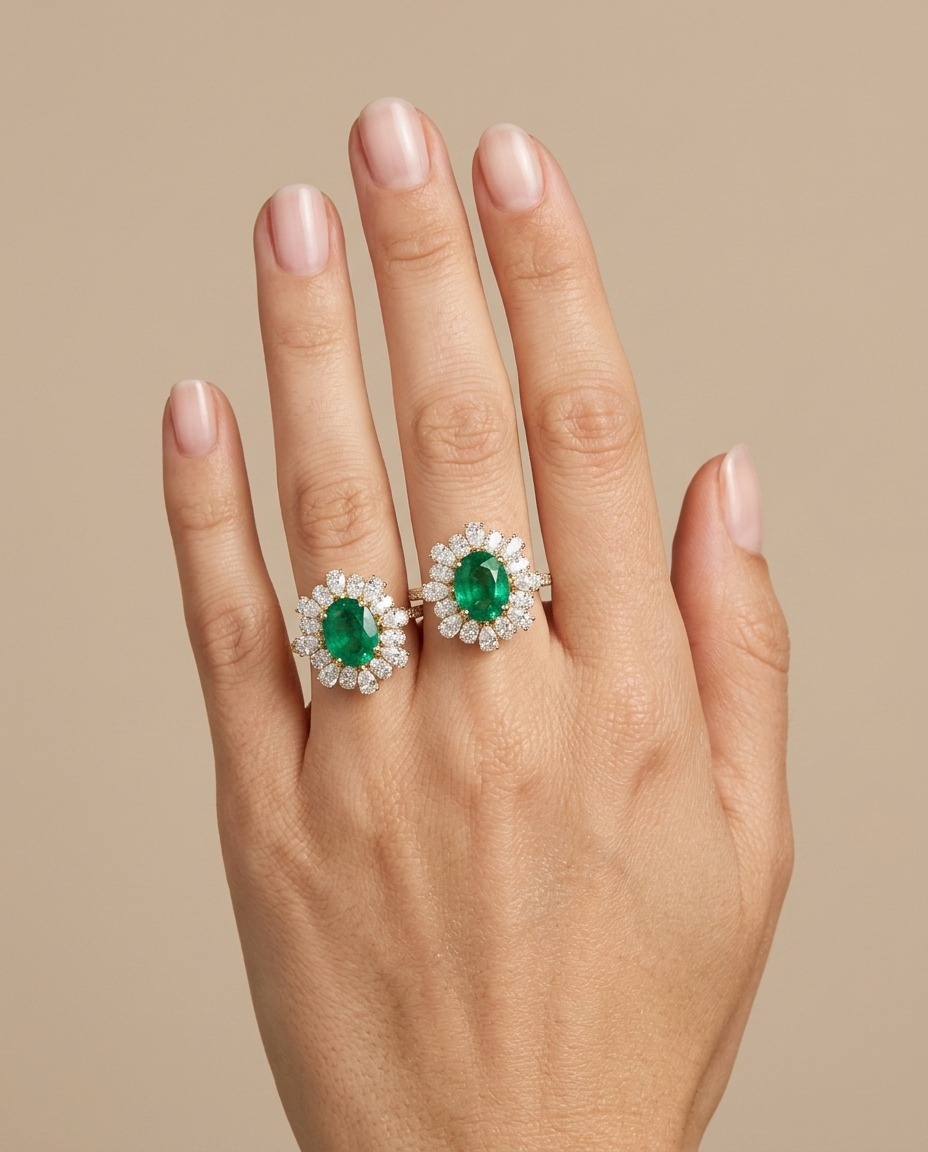
The pieces in this story
Shop the exact piece featured above.
Rings — available now
Live inventory from our collection. Pieces shown are in stock and update as they sell.