Styling Fine Rings on a Real Hand
Spacing, proportion, and knowing when to leave the ring in a dish by the sink.

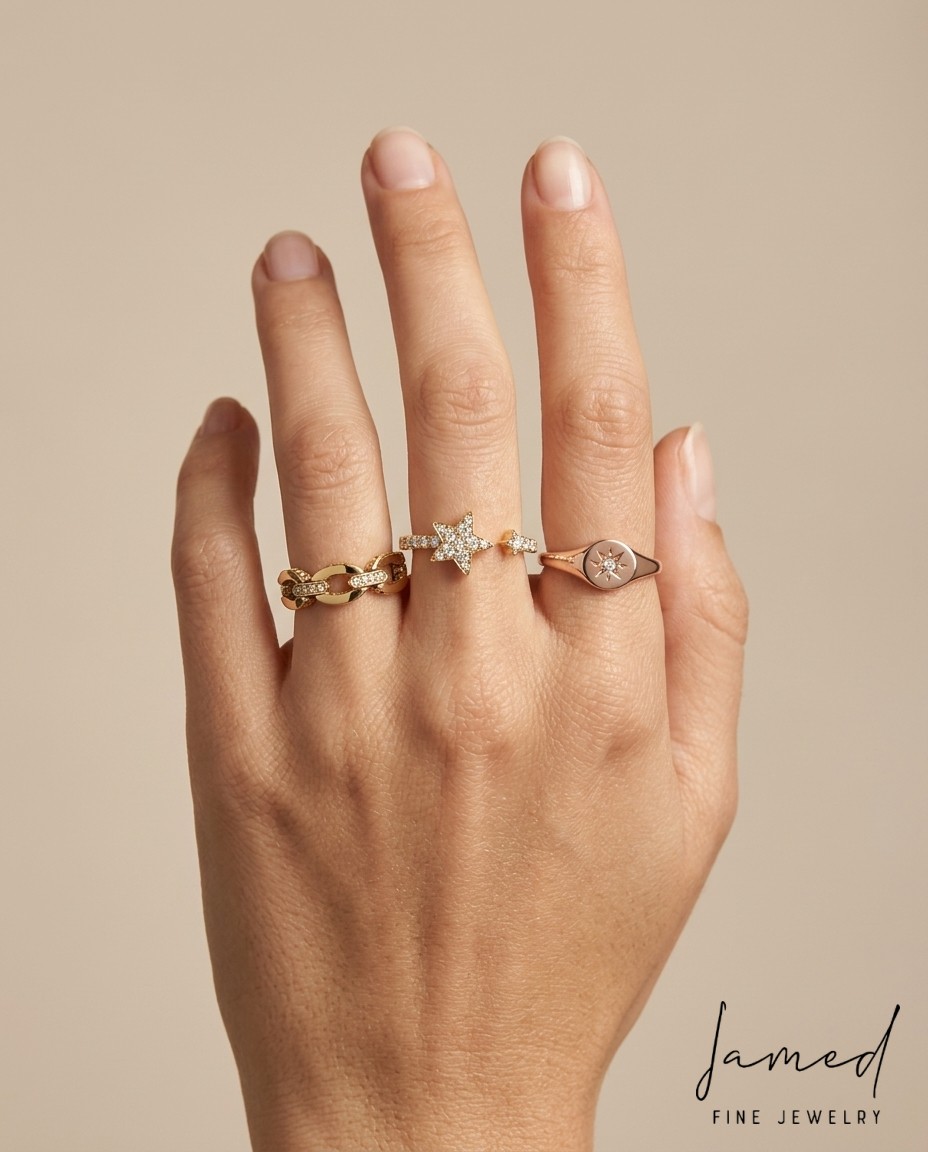
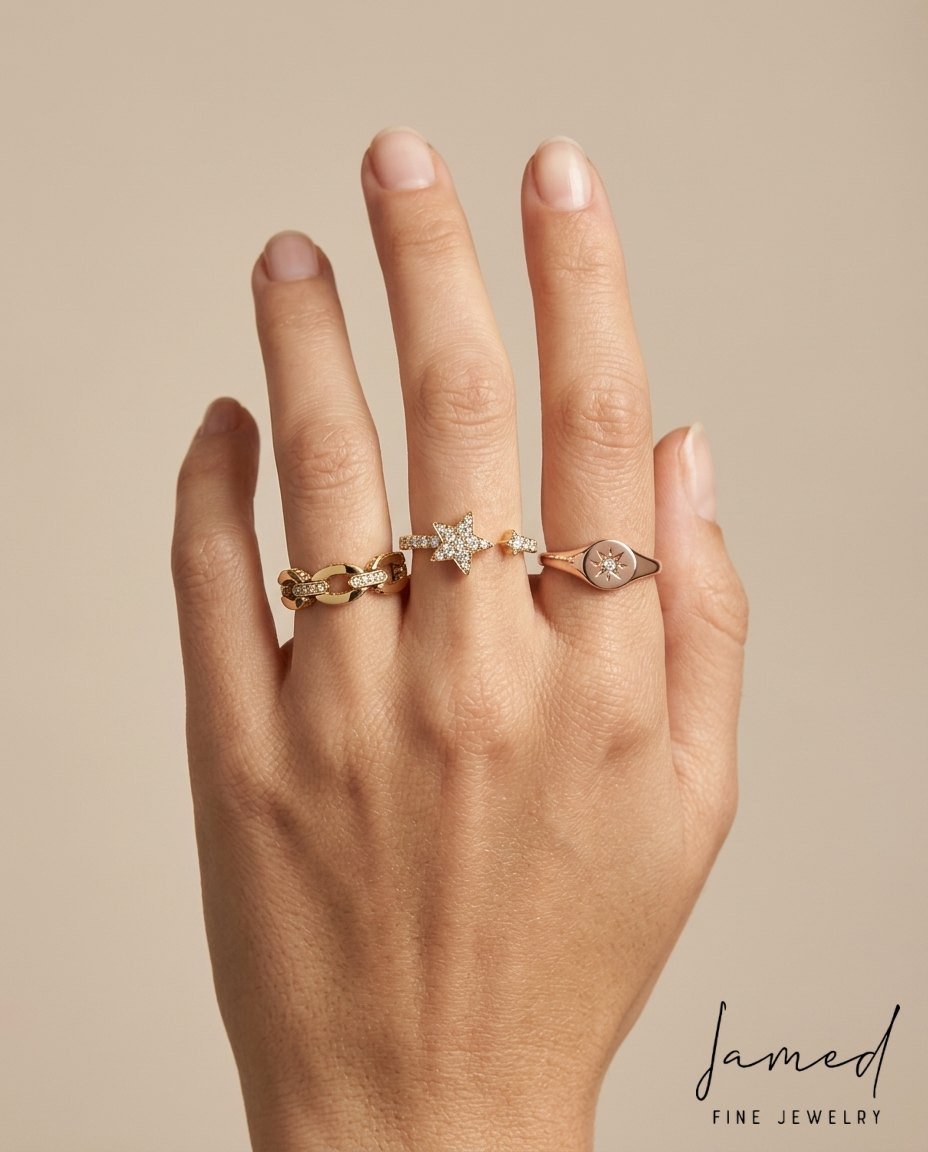
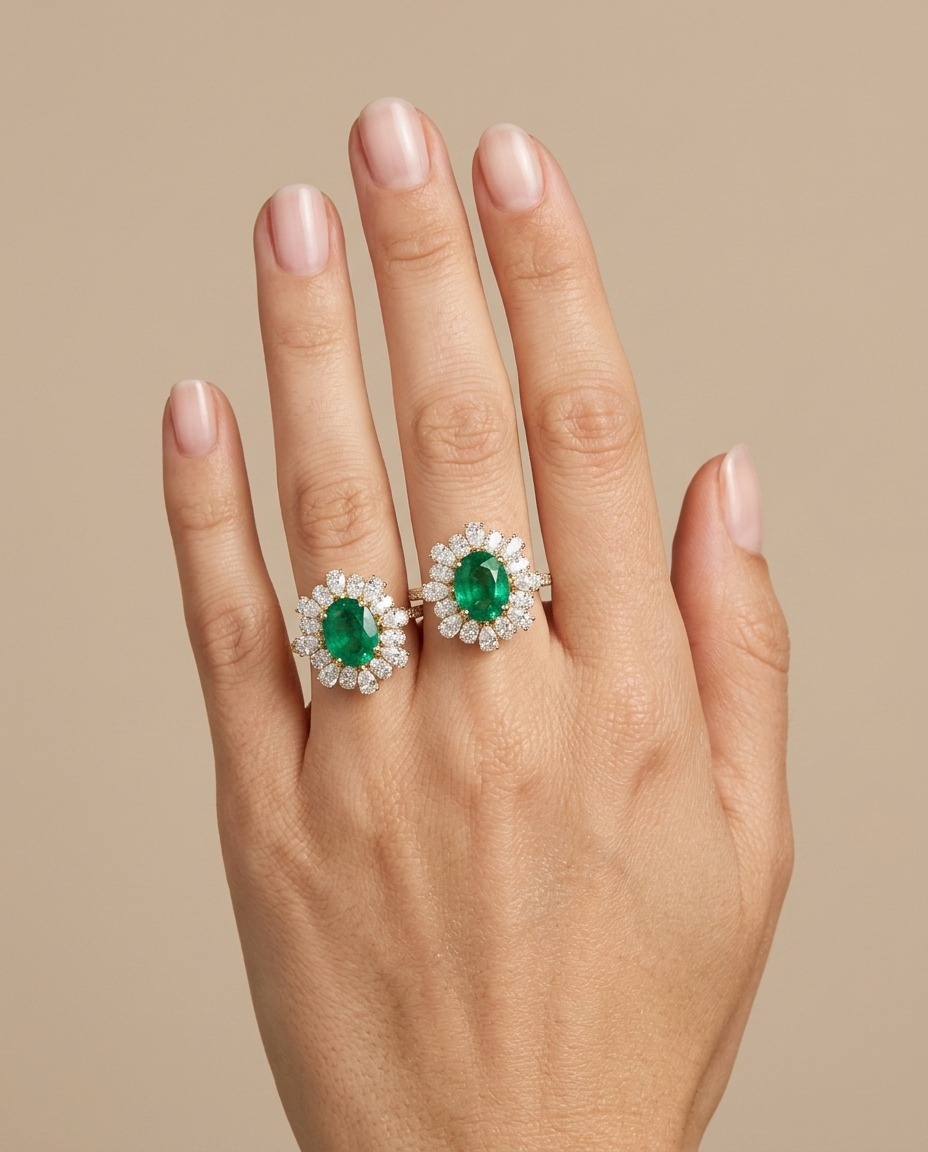
<p>Picture a bare hand at a dinner, one that reads elegant instead of loaded. The difference is rarely the rings themselves. It is how they are spaced, sized, and matched to what the hand is doing that night.</p><p>Start with the anchor. One statement ring, a solitaire or a colored stone, sits best on the ring or middle finger, with everything else kept quieter around it. A sapphire or emerald reads as color and wants plain gold nearby, not competing diamonds. Pairing a colored stone with a thin diamond band lets each one do a single job. Two rings on neighboring fingers should share either a metal or a mood, so the eye reads them as a pair and not a pileup.</p><p>Proportion is set by the hand, not the trend. Long fingers carry a wide band or a tall setting that would swamp a shorter hand, where a slim band and a lower stone keep things in scale. A ring should stop a few millimeters short of the knuckle so it turns freely without spinning loose.</p><p>Metals can mix if the mix looks deliberate. Two tones, warm gold and white, read as a choice. Three or more read as an accident. Keep colored stones to one family per hand, so a ruby and an emerald are not fighting across your fingers at the same table.</p><p>There are hands and moments to leave the rings home. A pavé cocktail ring snags on knit gloves and fine fabrics and has no business at the gym, where sweat and impact loosen stones. Gardening, kneading dough, and lifting weights are when a good ring earns a dish by the sink instead of a bent prong.</p><p>The rule of thumb is simple. Let one ring lead and the rest support, and never wear a ring that has to fight the hand it lives on.</p>
The pieces in this story
Shop the exact piece featured above.
Rings — available now
Live inventory from our collection. Pieces shown are in stock and update as they sell.